
Global Schedule Reliability Continues to Plummet in August
Sea-Intelligence’s latest Global Liner Performance (GLP) report highlights just how difficult conditions remain across global shipping networks.
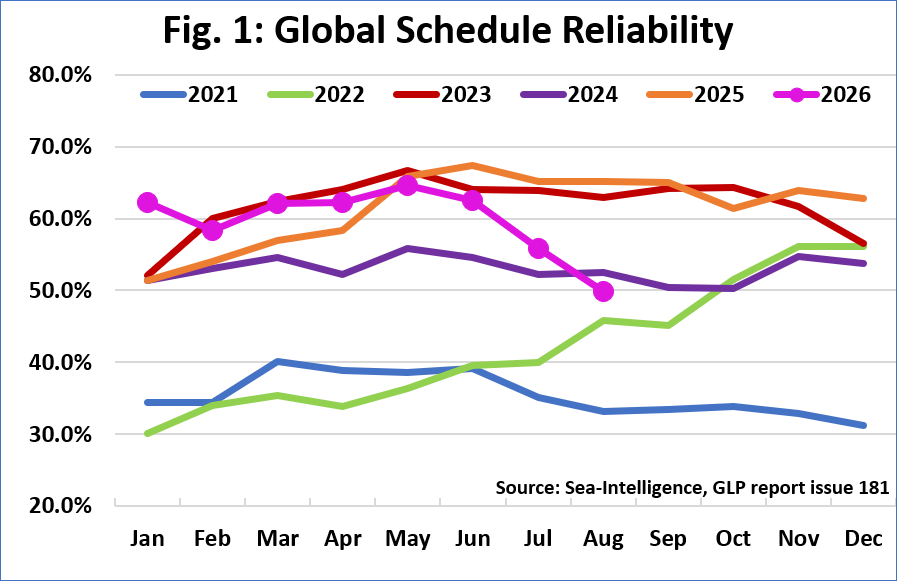
Image credit: Sea Intelligence
Global schedule reliability fell to 49.9% in August, a further 5.9 percentage point decline from July and the lowest level recorded since September 2022. At the same time, the average delay for vessels arriving late increased to 6.81 days.
But for businesses involved in shipping from China and across Asia, the regional figures are particularly concerning.
Asia continues to struggle
Amid severe port congestion, container vessel schedule reliability across Asia dropped to just 32.3% in August, with late vessels averaging 7.28 days behind schedule.
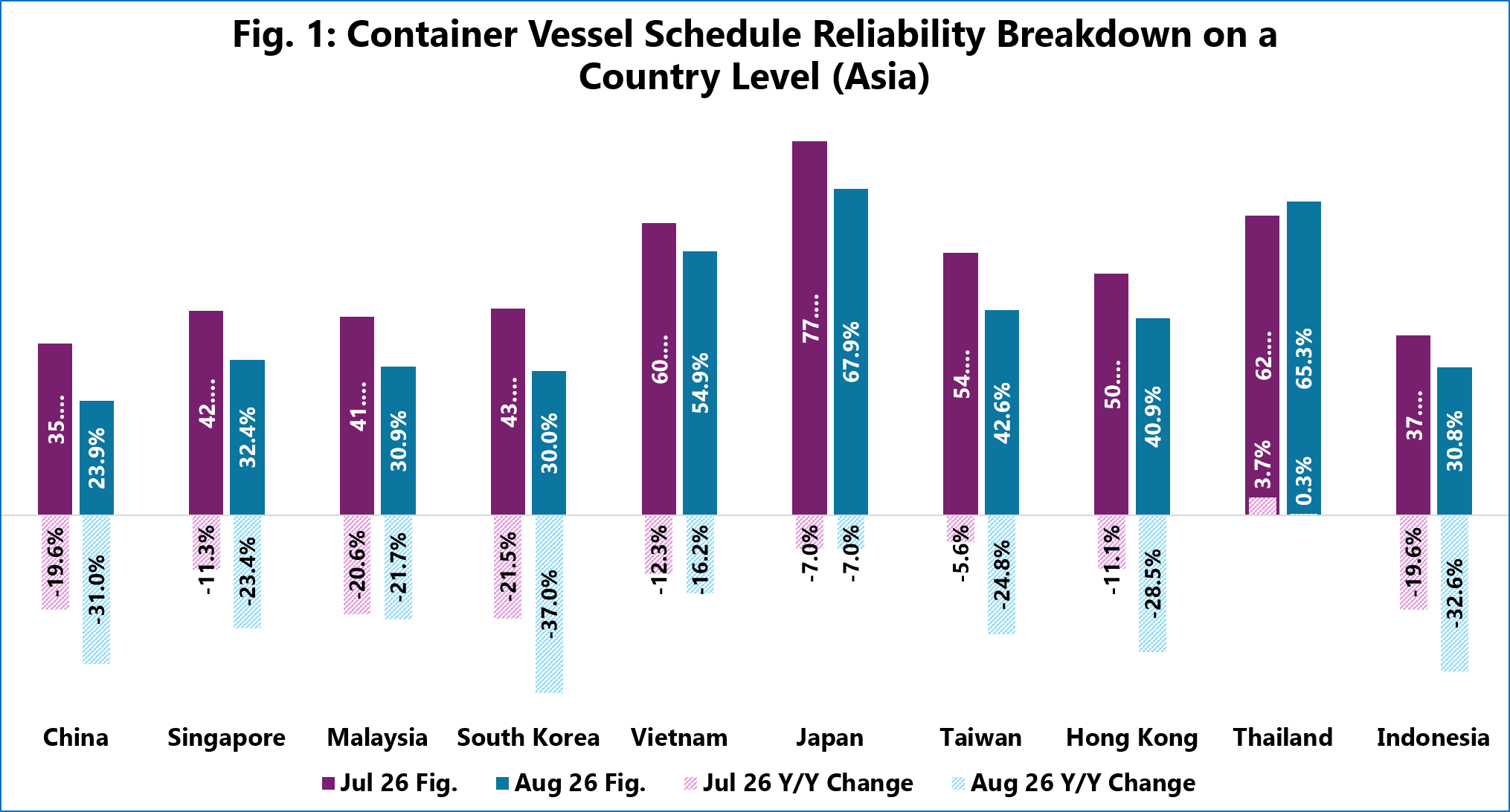
Image credit: Sea Intelligence
The decline was widespread, with most major Asian markets recording further deterioration from an already difficult July. South Korea recorded the largest monthly decline, while Thailand was the only country to record an improvement.
China was particularly affected, with vessel schedule reliability falling to just 23.9%.
At two of the country’s largest ports, the numbers were even lower. Shanghai recorded schedule reliability of just 12.2%, while Ningbo was at 16.9%.
This is important for Australian businesses relying on shipping from China and other parts of Asia. When vessels are delayed at origin, the impact can flow through the network, affecting connecting services, port arrivals and onward transport.
What does this mean for shipping into Australia?
For importers, unreliable schedules make it increasingly difficult to work to the transit times originally quoted at the time of booking.
Delays can have a flow-on effect across the supply chain, particularly where cargo is moving through congested ports or connecting to another service. Warehouse deliveries, transport bookings and inventory planning can all be affected.
For businesses shipping into Australia, particularly from China and other major Asian markets, allowing additional time around quoted transit schedules is becoming increasingly important.
The latest figures are another reminder that a vessel schedule is just that .. a schedule. With almost half of global container vessels arriving on time in August, there is still considerable uncertainty across the network.