
There’s a small improvement in global shipping reliability, but it’s way too early to celebrate.
Sea-Intelligence’s latest Global Liner Performance report, covering September 2026, shows schedule reliability increased by 0.9 percentage points to 50.6%, following three consecutive monthly declines.
The average delay for vessels arriving late also improved, falling to 6.65 days. However, it remains the second-highest September figure on record, highlighting the ongoing challenges facing shipping schedules.
Which shipping lines performed best?
Among the 13 largest carriers, Maersk ranked first with schedule reliability of 64.8%, followed by Hapag-Lloyd at 60.4%. Wan Hai recorded the lowest result at 26.7%.
On a year-on-year basis, none of the 13 carriers improved their reliability, with 12 recording double-digit declines.
Among the alliances, MSC led with reliability of 68.9%, narrowly ahead of Gemini at 68.4%. Ocean Alliance recorded 44.8%, while Premier Alliance came in at 41.5%.
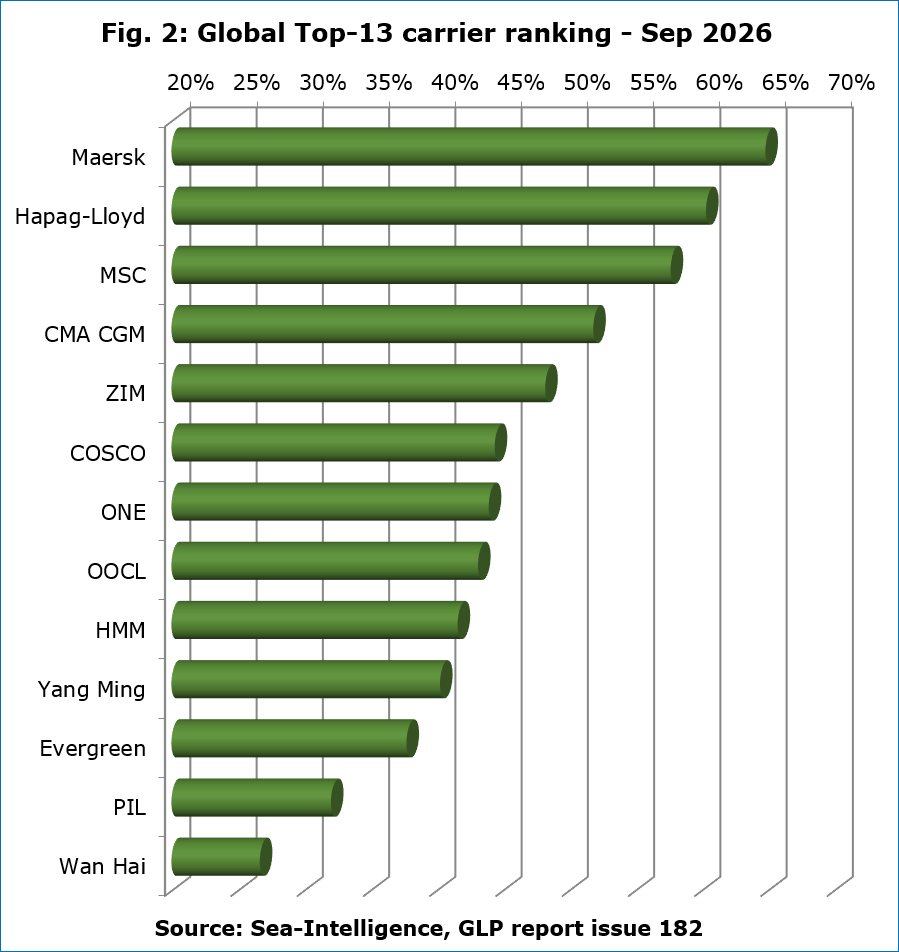
Image credit: Sea Intelligence
A small improvement, but not back on schedule
September’s figures offer some relief after several months of declining reliability. However, with only around half of vessels arriving on schedule and late arrivals still experiencing lengthy delays, reliable transit times remain difficult to predict.
For businesses planning shipments, the message is familiar: allow flexibility, keep communication open and treat vessel schedules and estimated arrival dates as estimates, not guarantees.
Source: Sea-Intelligence, Global Liner Performance Report, Issue 182.