
Global Container Shipping Volumes Rise Despite Middle East Disruption
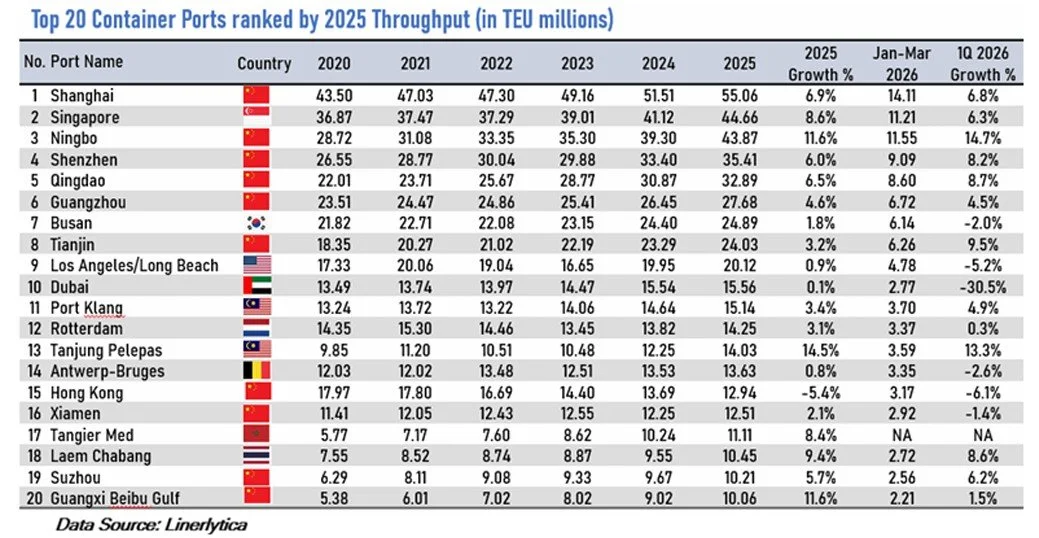
Top 20 Container Ports
Global container shipping volumes remained resilient through the first quarter of 2026, despite ongoing disruption in the Middle East and continued uncertainty across international supply chains.
According to the latest global port data, throughput across the world’s top 20 container ports increased by 4%, with Chinese ports continuing to drive global trade growth. Ningbo was one of the strongest performers, overtaking Singapore to become the world’s second busiest container port after volumes surged 14.7%.
Dubai experienced one of the sharpest declines globally, with container volumes falling 30.5% following the closure of the Strait of Hormuz and the effective halt in vessel movements during March. In the United States, Los Angeles and Long Beach also recorded a 5.2% decline, reflecting the ongoing impact of tariff measures on trade flows.
Meanwhile, Malaysian ports continued to strengthen their position in global shipping. Port Klang moved into tenth place globally, while Tanjung Pelepas climbed to eleventh, with both ports recording new handling records driven by strong regional demand.
The latest results highlight the resilience of the global container shipping industry, as supply chains continue adapting to geopolitical disruption, changing trade patterns and shifting cargo flows.